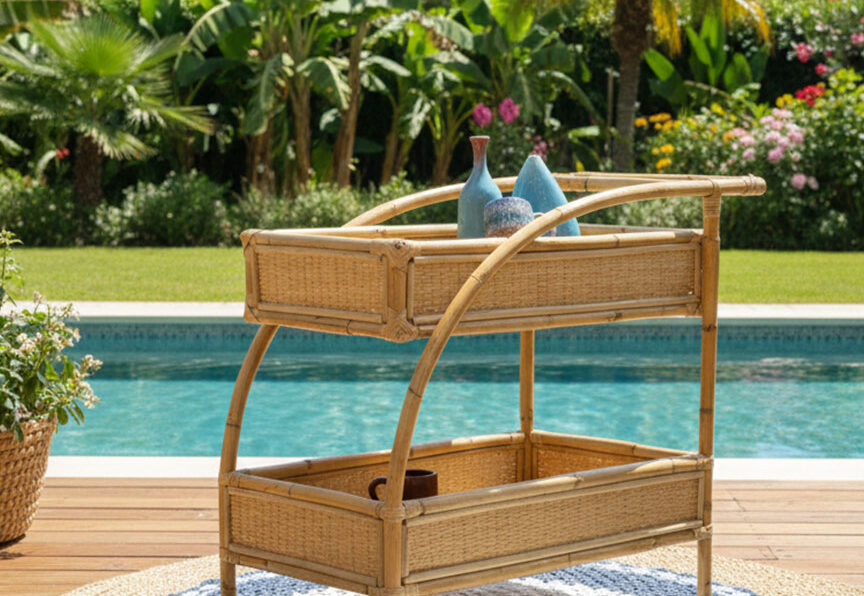
As homeowners and design enthusiasts increasingly look to create seamless, functional outdoor living areas, material choice has become a critical focal point. A common question echoing through showrooms and design blogs centers on a remarkably fast-growing grass: Is bamboo good for outdoor furniture?
The short answer is yes, but it comes with a major catch. While bamboo offers unmatched aesthetic appeal and unparalleled sustainability, its long-term viability on an open patio depends entirely on how it is processed, treated, and maintained.
The Rising Star of Sustainable Design
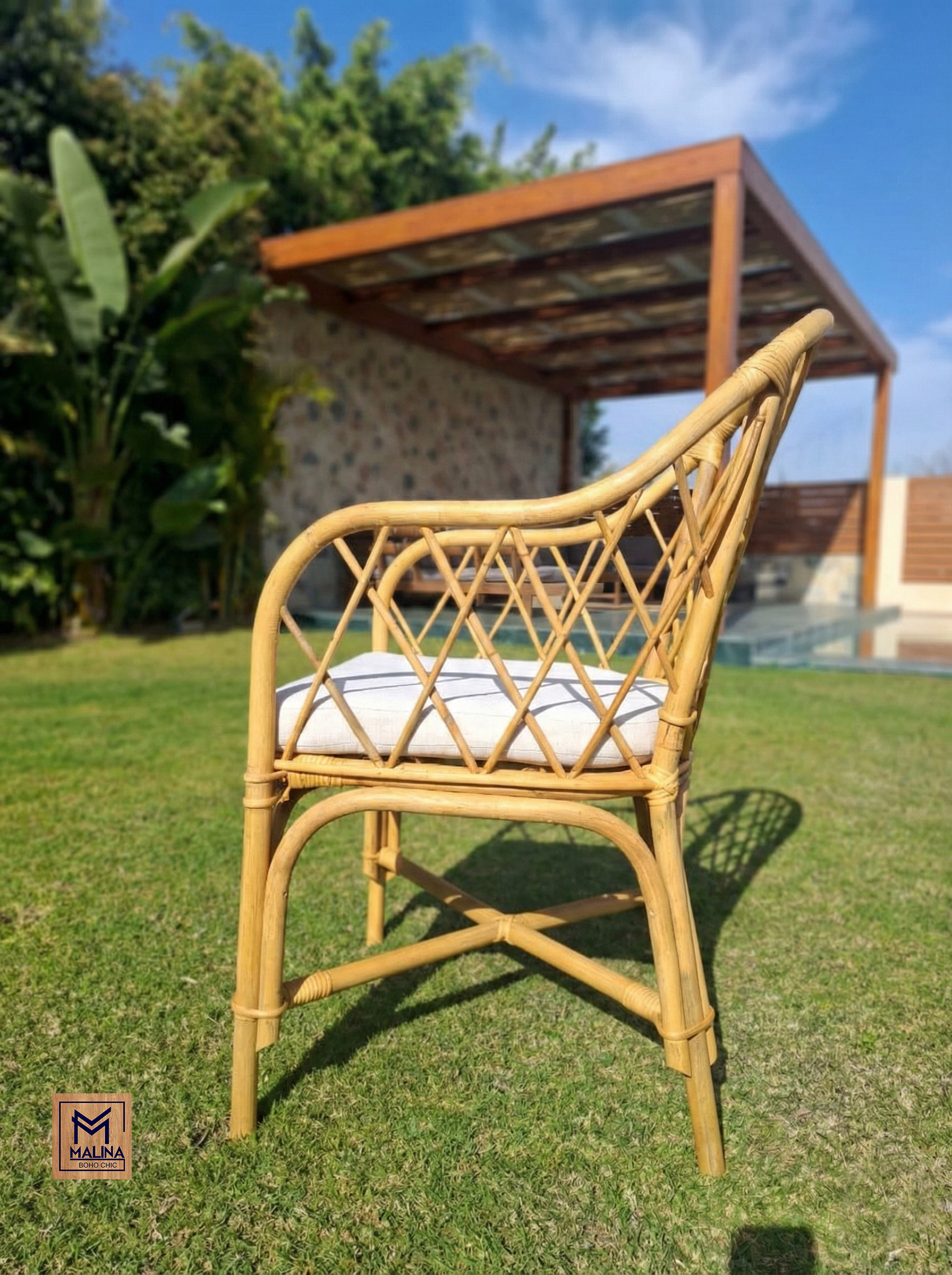
Before diving into the mechanics of weather resistance, it is important to understand why bamboo has captured the market’s attention. Technically a dense grass rather than a traditional hardwood, bamboo reaches maturity in just three to five years, compared to decades for standard timber.
When harvested and processed into “strand woven” or laminated timbers, it possesses a tensile strength that rivals steel and a structural density greater than oak. Visually, it brings a warm, minimalist, or tropical aesthetic that bridges the gap between mid century modernism and organic modern design. However, taking a plant that thrives in moist, tropical environments and turning it into static, outdoor furniture presents unique structural hurdles.
Can Bamboo Furniture Get Wet?
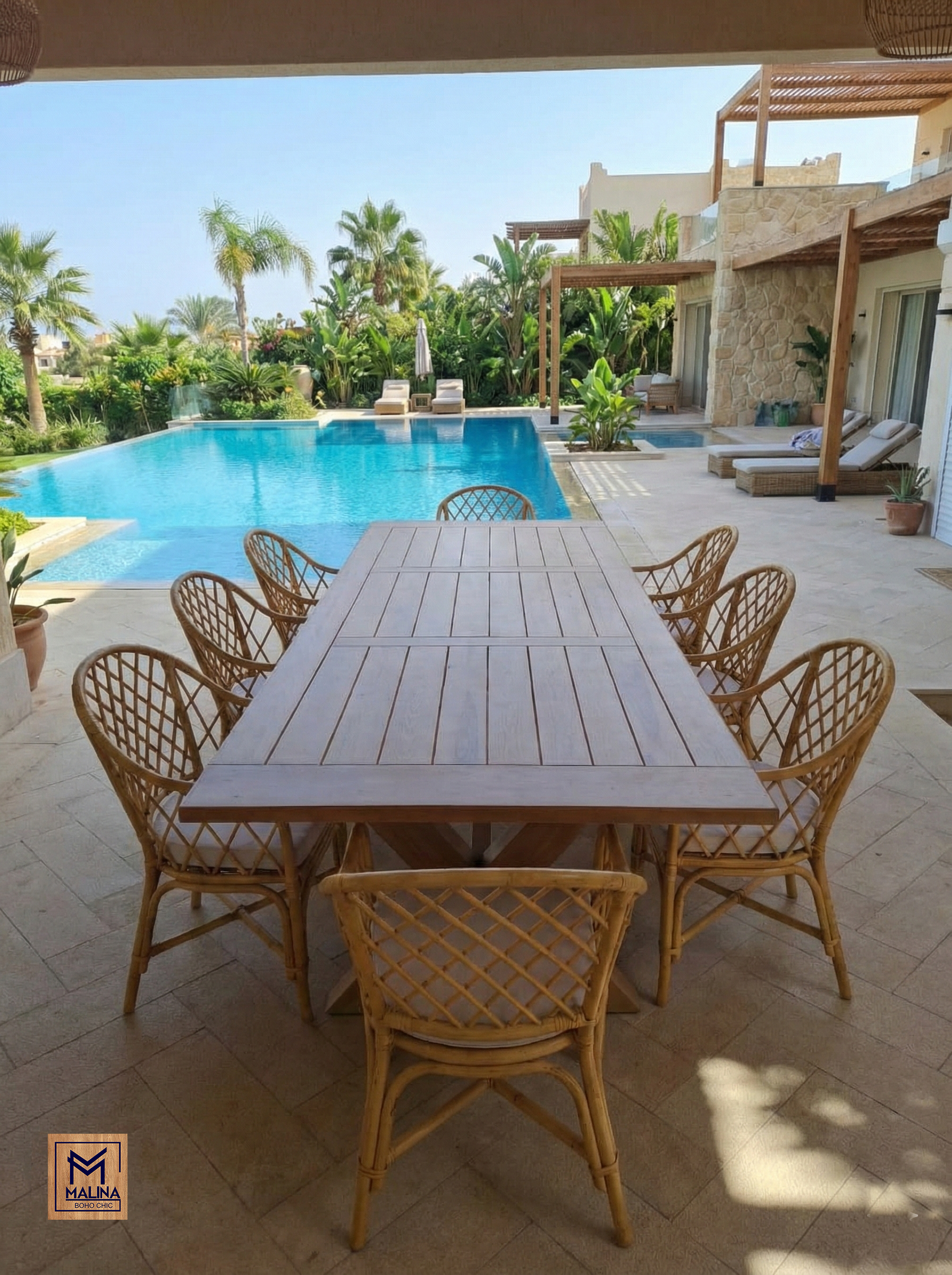
Yes, bamboo furniture can get wet, but it cannot stay wet. Bamboo is naturally a porous, cellular material. While a living bamboo stalk handles torrential downpours with ease thanks to its waxy, water-repellent outer skin, harvested and milled bamboo is highly vulnerable.
If your bamboo furniture is exposed to a passing summer shower, it will not instantly disintegrate. However, it cannot be treated like cast aluminum or synthetic wicker. If it is subjected to standing water, constant high humidity, or frequent rain without a proper protective barrier and adequate airflow, the material will absorb moisture like a sponge. Therefore, while it can tolerate getting wet occasionally, it is ideally suited for covered patios, screened porches, or environments where it can be shielded from intense, direct rainfall.
What Happens If Bamboo Furniture Gets Wet?
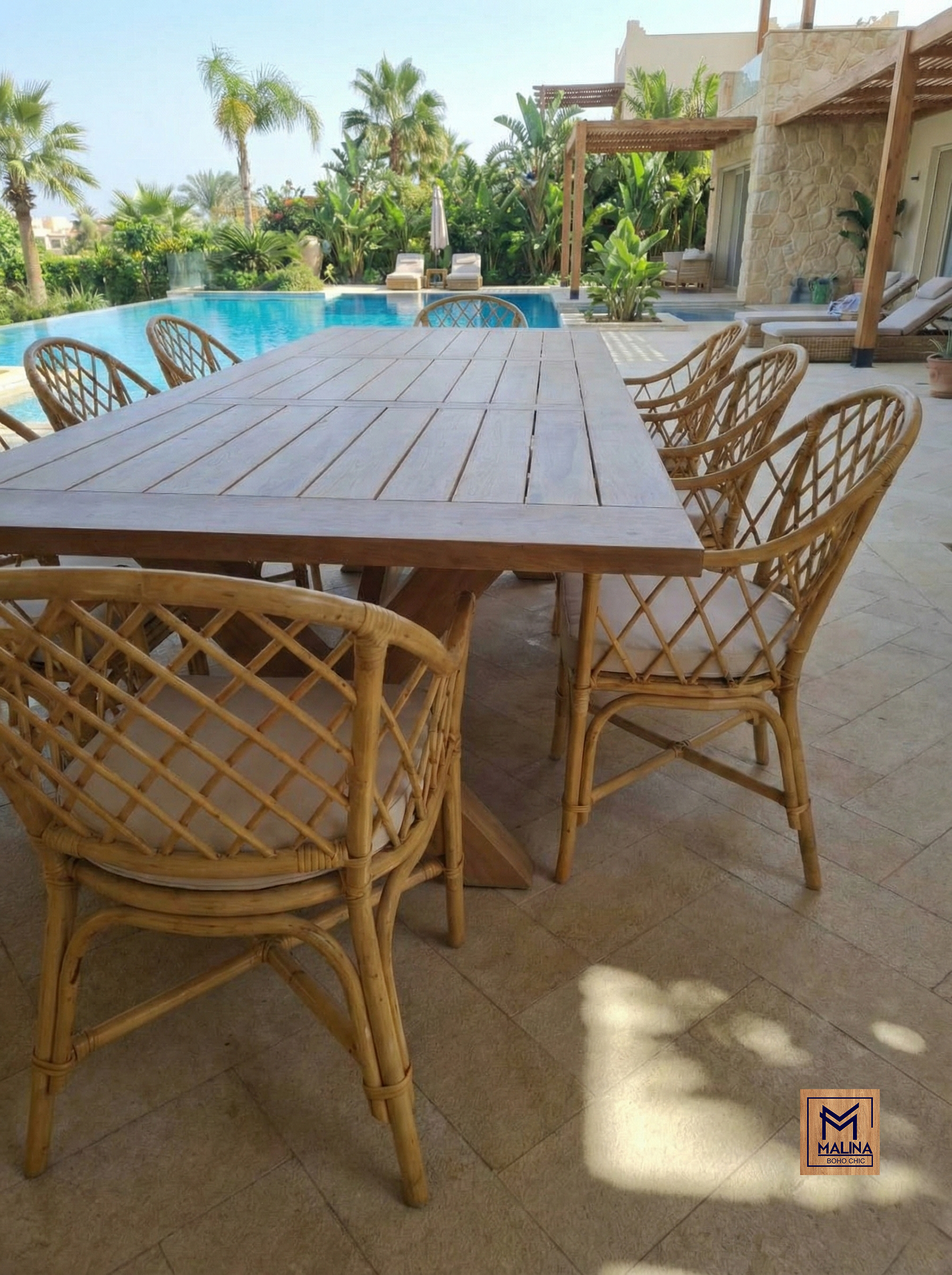
When bamboo furniture absorbs water without a chance to dry completely, a chain reaction of structural deterioration begins.
- Mold and Mildew Growth: The primary threat is the biological composition of the plant. Bamboo contains natural sugars and starches. When moisture penetrates the surface, it creates a perfect breeding ground for mold, mildew, and fungi, resulting in dark, unsightly stains and a musty smell.
- Warping and Splitting: Because bamboo is a composite of natural fibers, absorbing water causes these fibers to expand. When the sun comes out and dries the furniture rapidly, the fibers contract. This violent cycle of swelling and shrinking leads to checking (fine surface cracks), warping, and eventual structural splitting along the grain lines.
- Joint Weakness: Most modern bamboo furniture is constructed using laminates or joined with specialized adhesives. Extended exposure to moisture can break down these glues, causing the individual slats to delaminate and the structural integrity of the chair or table to fail entirely.
How to Treat Bamboo Furniture for Outdoor Use?
If you want your bamboo furniture to survive the elements, proper treatment is non-negotiable. To make it truly fit for a life outdoors, you must seal its porous exterior against moisture and UV degradation.
1. Deep Cleaning and Preparation
Before applying any protective coating, the furniture must be completely clean and dry. Scrub the surfaces gently with a soft brush and a mild solution of ecological dish soap and warm water. Allow the furniture to dry completely in the shade for at least 48 hours to ensure no ambient moisture is trapped inside the fibers.
2. Sanding
Lightly sand the furniture using a fine-grit sandpaper (around 220-grit). This removes any minor surface splinters and opens up the grain slightly, allowing the protective sealants to adhere deeply to the material.
3. Applying the Protective Coat
To defend against rain and sunshine, apply a high-quality exterior polyurethane sealer, marine-grade spar varnish, or a dedicated outdoor oil (such as tung or linseed oil) formulated with UV inhibitors. Varnish or polyurethane forms a hard, waterproof plastic shield over the bamboo, while specialized oils penetrate deep into the fibers to repel water from within. Apply at least two to three thin, even coats, allowing full drying time between applications.
What Is the Most Durable Wood for Outdoor Furniture?
While treated bamboo can perform admirably in protected outdoor environments, homeowners seeking absolute, unapologetic durability under direct sun and rain often look toward traditional hardwoods. If raw longevity is your primary metric, Teak is universally recognized as the most durable wood for outdoor furniture.
| Wood Species | Natural Qualities | Estimated Lifespan | Maintenance Level |
| Teak | High natural oil content, repels pests, water-resistant, minimal warping. | 50+ Years | Low to Medium |
| Ipe (Brazilian Walnut) | Extremely dense, scratch-resistant, highly resistant to rot and fungi. | 40+ Years | Low |
| Strand-Woven Bamboo | Highly sustainable, high tensile strength, must be structurally sealed. | 10–15 Years (Treated) | High |
Teak produces an abundance of natural oils and rubbers that remain embedded within the grain even after harvesting and curing. These internal oils act as a lifetime waterproofing agent, shielding the wood from rot, fungi, termites, and severe warping without requiring artificial sealants. Left untreated, teak beautifully patinas into a classic silvery-gray color, retaining its structural integrity for half a century or more.
Also You May Like: Bamboo Furniture Outside: Everything You Need to Know.